
Global AI Fetal Ultrasound View Detection Software Market at USD 388 Million in 2026, Reaching USD 933 Million by 2032, CAGR 15.8%, Driven by Congenital Defect Screening Demand.
Published Date: Friday,27 Nov,2026


 AI Fetal Ultrasound View Detection Software
 Market Summary
1. Definition
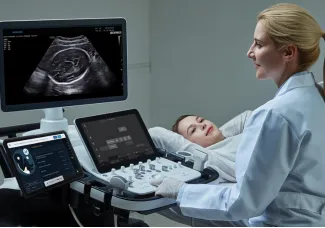
AI fetal ultrasound view detection software refers to intelligent analysis systems built on deep learning algorithms, designed to be embedded into obstetric ultrasound workflows for automatic identification, classification, and quality assessment of fetal anatomical structures and standard planes. These systems typically cover standard plane recognition for fetal head, abdomen, femur, cardiac views, spine, and facial structures, providing real-time feedback on image quality and completeness. The core value is to algorithmically standardize measurement procedures, reduce operator-dependent variability, and improve detection rates for complex structural abnormalities. From a technical architecture perspective, these platforms generally employ convolutional neural networks for real-time inference on dynamic ultrasound images, supporting cloud-based, on-premise, or hybrid deployment options.
2. Overall Industry Development
The global AI fetal ultrasound view detection software market is currently in a rapid expansion phase, positioning itself at a leading level among global medical software segments. In terms of business models, the market primarily adopts a hybrid pricing approach combining device-end licensing with cloud-based algorithm subscriptions.
The industry is currently at a critical juncture transitioning from technical validation to scaled commercial application. Multiple products have received regulatory approvals from major markets including the US Food and Drug Administration. Furthermore, the industry is evolving from an auxiliary screening tool toward an intelligent risk stratification and clinical decision support system.
North America currently holds the largest market share, attributed to its advanced healthcare infrastructure, high technology acceptance, and robust reimbursement systems. The Asia-Pacific region represents the fastest-growing market, driven by a large maternity population, healthcare digital transformation, and active domestic product development.
Global AI Fetal Ultrasound View Detection Software Market Size (US$ Million), 2021-2032
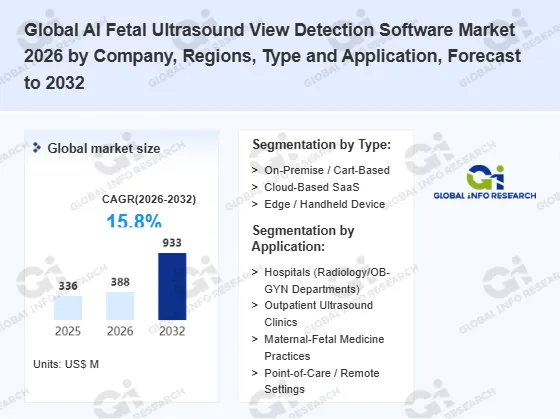
According to the latest report "Global AI Fetal Ultrasound View Detection Software Market 2026 by Manufacturers, Regions, Type and Application, Forecast to 2032" published by GIR (Global Info Research), the global AI Fetal Ultrasound View Detection Software market was valued at approximately USD 336 million in 2025 and is projected to reach USD 388 million in 2026. With a CAGR of 15.8% during the forecast period from 2026 to 2032, the market is expected to further expand to approximately USD 933 million by 2032. This growth is driven by increasing market demand, evolving industry trends, and expanding application opportunities worldwide.
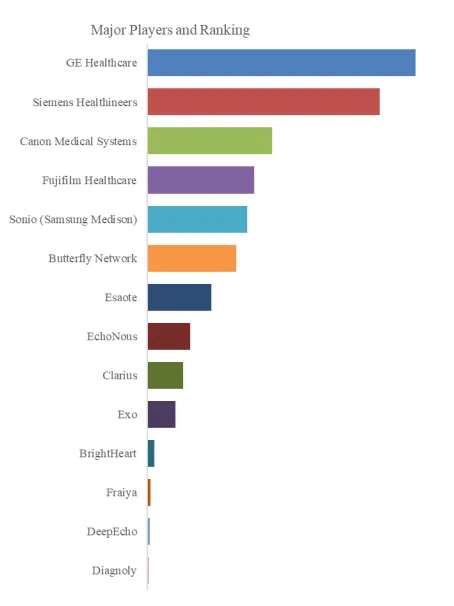
Global AI Fetal Ultrasound View Detection Software Top 14 Players Ranking and Market Share (Ranking is based on the revenue of 2025, continually updated)
4. Favorable Factors
Strong clinical demand is driven by congenital birth defects remaining a leading cause of neonatal mortality, with screening effectiveness heavily dependent on operator experience. AI serves as an untiring second pair of eyes, significantly improving efficiency.
Technological progress has made accurate recognition from complex ultrasound images possible, with leading products achieving regulatory approval from authorities such as the FDA.
Supportive policies include AI-assisted services being included as reimbursable items under ultrasound examinations in some markets like China.
Healthcare digital transformation is reducing technical barriers for AI integration, with telemedicine creating new application scenarios.
5. Unfavorable Factors
Technical limitations include algorithm generalizability boundaries, with performance potentially degrading when deployment environments differ substantially from training conditions. Current systems are primarily applicable to standard plane screening scenarios, with limited capability for complex or rare abnormalities.
Clinical acceptance issues include resistance from experienced sonographers who have developed established habits and ingrained routines, concerns about skill degradation from over-reliance on AI, and worries about legal liability in cases where AI errors occur.
Integration obstacles for third-party vendors include compatibility challenges across different equipment brands, with older devices lacking digital video output capabilities.
Ethical and legal uncertainties include liability attribution for missed abnormalities, data privacy concerns, and algorithm explainability issues.
6. Entry Barriers
Technological barriers require integration across computer vision, deep learning, medical image processing, ultrasound physics, and clinical obstetrics. Data acquisition and annotation are critical, requiring long-term clinical partnerships and extensive expert annotation time.
Regulatory barriers involve complex, time-consuming approval processes from authorities such as the FDA, CE, and NMPA, requiring substantial clinical evidence and resources.
Commercialization barriers include long sales cycles in hospital procurement, reliance on partnerships with ultrasound equipment manufacturers for market penetration, and payment uncertainties where reimbursement remains limited in many regions.
7. Industry Chain
The upstream segment includes data resources, where high-quality annotated ultrasound images are fundamental for model training, and computing infrastructure, requiring powerful GPU resources.
The midstream segment is the industry core, transforming data and computing into usable software products. Participants include large medical device companies, AI-focused startups, and academic spin-offs. Business models vary from software licensing and subscriptions to device-based licensing and software-plus-service models.
The downstream segment includes tertiary hospitals, secondary hospitals and private facilities, and primary healthcare institutions. Application scenarios include routine prenatal screening, targeted examinations, training and education, and telemedicine.
Value distribution places algorithm development and clinical validation at the highest value, followed by data resources and channel access. Future trends include vertical integration, evolving coopetition between device manufacturers and software vendors, and increasing price pressure on undifferentiated products.
AI Fetal Ultrasound View Detection Software Report Chapter Summary:
Chapter 1: AI Fetal Ultrasound View Detection Software Industry Definition and Market Overview
This chapter clearly defines the product definition, characteristics, and industry statistical scope of AI Fetal Ultrasound View Detection Software, systematically introduces its mainstream product classifications and key application areas, and presents the overall size and future outlook of the global market.
Chapter 2: In-depth Analysis of Core AI Fetal Ultrasound View Detection Software Companies (2021-2025)
This chapter focuses on the main players in the AI Fetal Ultrasound View Detection Software market. For each representative company, it not only introduces its basic overview, main business, and product portfolio, but also highlights its core operating data in the AI Fetal Ultrasound View Detection Software field, including sales volume, sales revenue, pricing strategies, and the latest development trends of the company from 2021 to 2025.
Chapter 3: Global Competitive Landscape Analysis (2021-2025)
This chapter examines the global AI Fetal Ultrasound View Detection Software competitive landscape from a macro perspective. By comparing the AI Fetal Ultrasound View Detection Software sales volume, pricing, revenue, and market share of major companies from 2021 to 2025, it quantitatively analyzes market concentration and interprets the competitive strategies and market position evolution of core manufacturers.
Chapter 4: AI Fetal Ultrasound View Detection Software Major Regional Market Size and Prospects (2021-2032)
This chapter conducts a regional-level analysis of the global AI Fetal Ultrasound View Detection Software core markets. It will present historical data on the AI Fetal Ultrasound View Detection Software market size (sales volume and revenue from 2021-2025) in major regions such as North America, Europe, and Asia Pacific, and provide market outlook forecasts for 2026-2032.
Chapter 5: AI Fetal Ultrasound View Detection Software Product Type Segmentation Market Forecast (2021-2032)
This chapter delves into the AI Fetal Ultrasound View Detection Software product structure. It will segment the AI Fetal Ultrasound View Detection Software market by different types (such as On-Premise / Cart-Based、Cloud-Based SaaS、Edge / Handheld Device, etc.), and analyze in detail the historical market size of each segmented product category from 2021 to 2025 and the future growth trends from 2026 to 2032.
Chapter 6: AI Fetal Ultrasound View Detection Software Application Field Segmentation Market Forecast (2021-2032)
This chapter delves into the downstream application demand for AI Fetal Ultrasound View Detection Software. The market will be segmented by different application areas (such as Hospitals (Radiology/OB-GYN Departments)、Outpatient Ultrasound Clinics、Maternal-Fetal Medicine Practices、Point-of-Care / Remote Settings, etc.), presenting the historical market size for each area from 2021-2025 and future demand forecasts from 2026-2032.
Chapters 7-11: In-depth Analysis of Global Regional Markets (2021-2032)
This section is the core module of the AI Fetal Ultrasound View Detection Software report, providing an in-depth country/regional analysis across five major regions: North America, Europe, Asia Pacific, South America, and the Middle East & Africa. The chapter structure for each region is consistent:
Segmentation by Country/Region: Analysis of the market size and forecasts for major countries within the region from 2021-2032.
Segmentation by Product Type: Presentation of the market structure and development forecasts for different product types within the region from 2021-2032.
Segmentation by Application Area: Analysis of market demand and prospects for different application areas within the region from 2021-2032.
Chapter 12: Global AI Fetal Ultrasound View Detection Software Market Dynamics, Challenges, and Trends
This chapter aims to analyze the key internal and external factors affecting the development of the AI Fetal Ultrasound View Detection Software market. It systematically reviews the core drivers of AI Fetal Ultrasound View Detection Software market growth, the main obstacles and challenges faced, and assesses future product, technology, and market development trends.
Chapter 13: AI Fetal Ultrasound View Detection Software Industry Chain Structure Analysis
This chapter analyzes the entire industry chain ecosystem of the AI Fetal Ultrasound View Detection Software industry. From upstream raw material supply to midstream production and manufacturing, and then to downstream end-use applications, it analyzes the current status, cost structure, and collaborative relationships of each link.
Chapter 14: Sales Channel Model Research
This chapter focuses on the distribution channels of AI Fetal Ultrasound View Detection Software products. It analyzes the market share, advantages and disadvantages, and typical cases of mainstream sales channels, and explores the innovation and development trends of channel models.
Chapter 15: Research Conclusions and Strategic Recommendations
As a summary of the report, this chapter will distill the core findings and conclusions of the entire report and, based on a comprehensive understanding of the AI Fetal Ultrasound View Detection Software market, provide actionable strategic development recommendations for industry participants and potential entrants.
For more information, please refer to "Global AI Fetal Ultrasound View Detection Software Market 2026 by Manufacturers, Regions, Type and Application, Forecast to 2032". This report analyzes the supply and demand situation, development status, and changes in the industry, focusing on the development status of the industry, how to face the development challenges of the industry, industry development suggestions, industry competitiveness, and industry investment analysis and trend forecasts. The report also summarizes the overall development dynamics of the industry, including the impact of the latest US tariffs on the global supply chain, the supply relationship analysis of the industrial chain, and provides reference suggestions and specific solutions for the industry in terms of products.
Previous News:
Surgical Planning, Simulation Training and Drug Screening Platforms: Global 3D Printed Vasculature to Reach USD 0.03162 Billion by 2032, CAGR 6.7%.
Next News:
Global 1.6T Silicon Photonics Optical Engine Market in Depth: USD 545 Million Scale, Full-Stack Competition, Industry Chain and the USD 1.795 Billion Strategic Opportunity by 2032.
The copyright of this article belongs to Global Info Research. Without the written authorization of our company, no organization or individual may reprint, quote, copy, adapt or use it for commercial purposes in any way. When authorized to use, the original source must be indicated as "Global Info Research" and the complete copyright information must be retained.
- We Provide Professional, Accurate Market Analysis to Help You Stay Ahead of Your Competition.Speak to our analyst >>

Our Clients
What We Can Provide?
With better results and higher quality products,Our professional reports can achieve four things:

Insight into the industry market information

Analyze market development needs

Prospects for future development

Develop industry investment strategy
- Digging deeper into global industry information and providing market strategies.Contact Us >>
- We Provide Professional, Accurate Market Analysis to Help You Stay Ahead of Your Competition.Speak to our analyst >>
Our Clients
What We Can Provide?
With better results and higher quality products,Our professional reports can achieve four things:
Insight into the industry market information
Analyze market development needs
Prospects for future development
Develop industry investment strategy
- Digging deeper into global industry information and providing market strategies.Contact Us >>