
Global Medical Grade All-in-One PC Market Valued at US$381 Million in 2026, Projected to Reach US$540 Million by 2032 at 5.0% CAGR
Published Date: Friday,21 Aug,2026


Medical Grade All-in-one PC Market Summary
A Medical Grade All-in-one PC is an integrated computer terminal specifically designed for healthcare environments. It combines the computer, medical-grade touch display, sealed enclosure and clinical I/O interfaces in one device, and is engineered for hospital safety, reliability, easy cleaning and infection-control requirements. Typical functions include electronic medical record access, patient monitoring support, telemedicine, medical imaging viewing and point-of-care documentation.
Figure. Global Medical Grade All-in-one PC Market Size (US$ Million), 2025 VS 2032
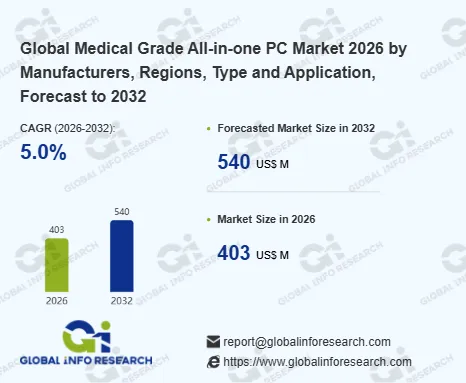
According to the latest report "Global Medical Grade All-in-one PC Market 2026 by Manufacturers, Regions, Type and Application, Forecast to 2032" published by GIR (Global Info Research), the global Medical Grade All-in-one PC market was valued at approximately USD 381 million and is projected to reach USD 540 million in the coming years, expanding at a CAGR of 5.0%. This growth reflects sustained market momentum and increasing opportunities driven by evolving industry demand and emerging application scenarios.
Figure. Global Medical Grade All-in-one PC Top 18 Players Ranking and Market Share (Ranking is based on the revenue of 2025, continually updated)
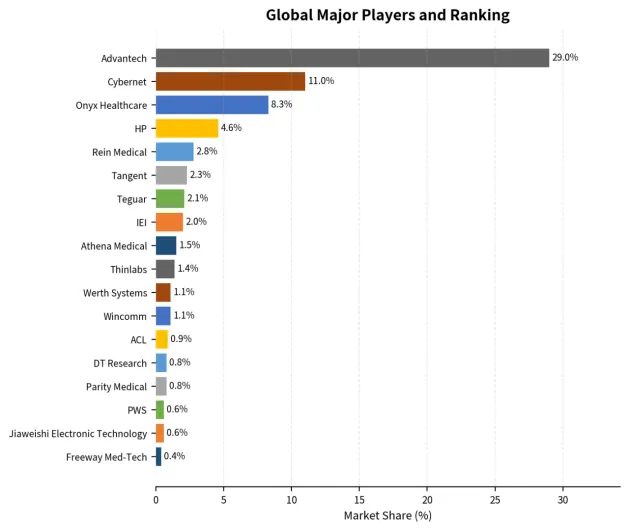
At present, the global core manufacturers are mainly distributed in North America, Asia-Pacific and Europe. Advantech, Cybernet and Onyx Healthcare lead the market, while HP, Teguar, Rein Medical, IEI, Wincomm and other specialized medical-computing vendors compete in certified terminals, mobile carts and hospital IT integration.
Figure. Medical Grade All-in-one PC, Global Market Size, Split by Product Segment
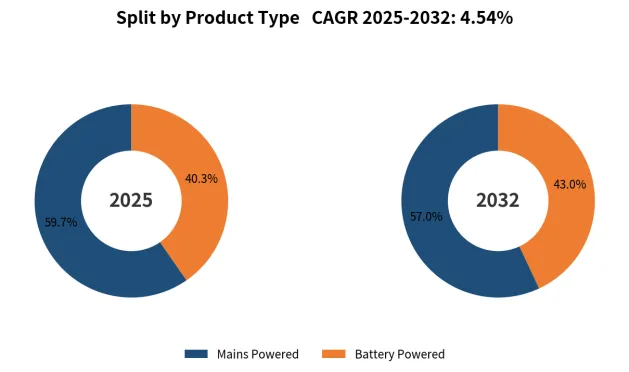
In terms of product type, mains powered medical grade all-in-one PCs remain the largest segment, holding about 59.65% of the market in 2025. Battery powered products are growing faster because mobile carts and bedside workflows require uninterrupted operation during patient movement and power interruptions.
Figure. Medical Grade All-in-one PC, Global Market Size, Split by Application Segment
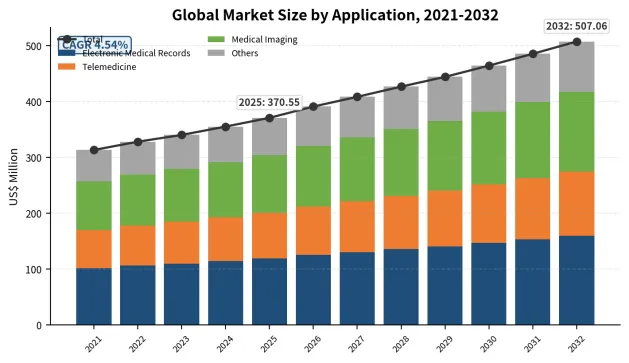
In terms of application, electronic medical records remain the largest downstream use case, while telemedicine and medical imaging show faster growth momentum. The market is evolving from basic bedside documentation toward integrated clinical collaboration terminals.
Figure. Medical Grade All-in-one PC, Global Market Size, Split by Region, 2021-2032
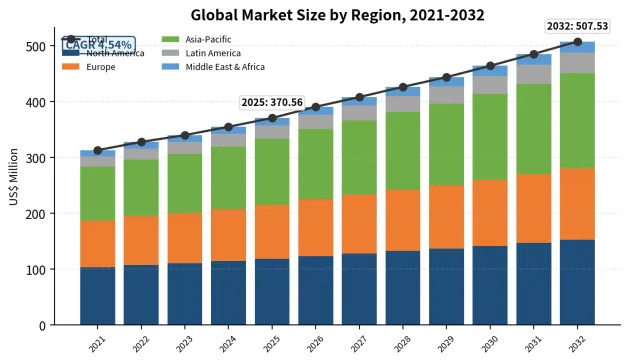
Figure. Medical Grade All-in-one PC Industry Chain Analysis
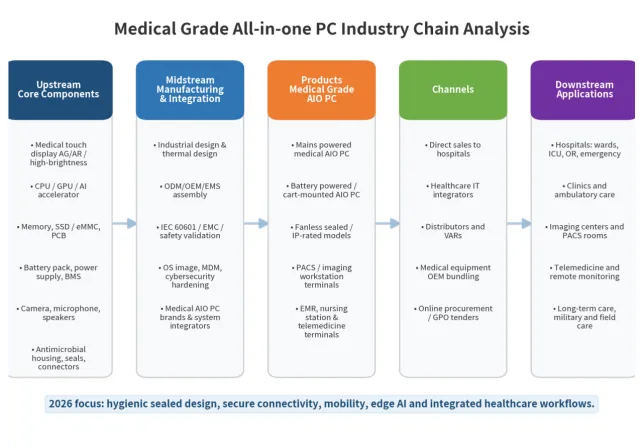
Table. Medical Grade All-in-one PC Industry Policy Analysis
|
No. |
Policy |
Description |
|
1 |
EU Medical Device Regulation (MDR) / CE pathway |
Medical-grade PCs used as medical electrical equipment or bundled with medical devices must support compliance evidence on safety, EMC, labeling, lifecycle control and post-market obligations for EU access. |
|
2 |
FDA quality-system and cybersecurity guidance |
Connected medical terminals used in healthcare networks increasingly require secure-by-design documentation, software updates, vulnerability handling and risk-management files. |
|
3 |
IEC 60601-1 / IEC 60601-1-2 and hygiene standards |
Patient-area computers are expected to meet electrical safety, electromagnetic compatibility, leakage-current, cleaning and disinfection requirements, raising barriers for low-end industrial PCs. |
Table. Medical Grade All-in-one PC Industry Development Trends
|
No. |
Development Trends |
Description |
|
1 |
Digital-care workflow integration |
Hospitals are upgrading EMR, PACS, nursing and telehealth workflows. Demand is shifting from basic displays to integrated, cart-ready and wall-mounted clinical terminals. |
|
2 |
Hygienic sealed design |
Fanless architecture, antimicrobial coating, IP-rated front panels and smooth housings are becoming standard design directions for wards, ICU and operating rooms. |
|
3 |
Mobility and battery operation |
Battery-powered AIO PCs on carts are gaining share because they support bedside charting, medication administration and temporary triage locations. |
|
4 |
Secure edge computing and AI readiness |
Higher-performance CPUs, GPUs/NPUs, secure boot, TPM, remote management and endpoint protection are being added for imaging, video consultation and AI-assisted workflows. |
Table. Medical Grade All-in-one PC Industry Development Opportunities
|
No. |
Development Opportunities |
Description |
|
1 |
Healthcare IT refresh cycle |
Windows upgrades, cybersecurity hardening and replacement of aging terminals create demand for certified medical AIO PCs. |
|
2 |
Asia-Pacific hospital investment |
New hospital construction, digital hospitals and telemedicine expansion in China, India and Southeast Asia support above-average regional growth. |
|
3 |
PACS and imaging workstation expansion |
Higher-resolution displays and graphics performance requirements create opportunities for premium medical AIO configurations. |
|
4 |
OEM bundling and ecosystem partnerships |
Medical-equipment OEMs and healthcare IT integrators can bundle AIO PCs with carts, imaging devices, EMR software and remote-monitoring solutions. |
Table. Medical Grade All-in-one PC Obstacles/Challenges to Industry Development
|
No. |
Obstacles/Challenges |
Description |
|
1 |
Compliance cost and long validation cycle |
Medical safety, EMC, biocompatible surface and cleaning validation increase certification cost and extend product launch cycles. |
|
2 |
Cybersecurity and data privacy risk |
Hospital networks face ransomware and privacy risks; terminals must support patching, access control, encryption and lifecycle maintenance. |
|
3 |
Price pressure and product similarity |
Industrial PC vendors and local brands intensify price competition, especially in mainstream EMR and nursing-station configurations. |
|
4 |
Supply-chain volatility |
Displays, processors, memory, power modules and batteries are exposed to semiconductor cycles, geopolitical restrictions and component EOL risks. |
.Medical Grade All-in-one PC Report Chapter Summary:
Chapter 1: Medical Grade All-in-one PC Industry Definition and Market Overview
This chapter clearly defines the product definition, characteristics, and industry statistical scope of Medical Grade All-in-one PC, systematically introduces its mainstream product classifications and key application areas, and presents the overall size and future outlook of the global market.
Chapter 2: In-depth Analysis of Core Medical Grade All-in-one PC Companies (2021-2025)
This chapter focuses on the main players in the Medical Grade All-in-one PC market. For each representative company, it not only introduces its basic overview, main business, and product portfolio, but also highlights its core operating data in the Medical Grade All-in-one PC field, including sales volume, sales revenue, pricing strategies, and the latest development trends of the company from 2021 to 2025.
Chapter 3: Global Competitive Landscape Analysis (2021-2025)
This chapter examines the global Medical Grade All-in-one PC competitive landscape from a macro perspective. By comparing the Medical Grade All-in-one PC sales volume, pricing, revenue, and market share of major companies from 2021 to 2025, it quantitatively analyzes market concentration and interprets the competitive strategies and market position evolution of core manufacturers.
Chapter 4: Medical Grade All-in-one PC Major Regional Market Size and Prospects (2021-2032)
This chapter conducts a regional-level analysis of the global Medical Grade All-in-one PC core markets. It will present historical data on the Medical Grade All-in-one PC market size (sales volume and revenue from 2021-2025) in major regions such as North America, Europe, and Asia Pacific, and provide market outlook forecasts for 2026-2032.
Chapter 5: Medical Grade All-in-one PC Product Type Segmentation Market Forecast (2021-2032)
This chapter delves into the Medical Grade All-in-one PC product structure. It will segment the Medical Grade All-in-one PC market by different types (such as Mains Powered Medical Grade All-in-one PC、Battery Powered Medical Grade All-in-one PC, etc.), and analyze in detail the historical market size of each segmented product category from 2021 to 2025 and the future growth trends from 2026 to 2032.
Chapter 6: Medical Grade All-in-one PC Application Field Segmentation Market Forecast (2021-2032)
This chapter delves into the downstream application demand for Medical Grade All-in-one PC. The market will be segmented by different application areas (such as Electronic Medical Records、Telemedicine、Medical Imaging、Others, etc.), presenting the historical market size for each area from 2021-2025 and future demand forecasts from 2026-2032.
Chapters 7-11: In-depth Analysis of Global Regional Markets (2021-2032)
This section is the core module of the Medical Grade All-in-one PC report, providing an in-depth country/regional analysis across five major regions: North America, Europe, Asia Pacific, South America, and the Middle East & Africa. The chapter structure for each region is consistent:
Segmentation by Country/Region: Analysis of the market size and forecasts for major countries within the region from 2021-2032.
Segmentation by Product Type: Presentation of the market structure and development forecasts for different product types within the region from 2021-2032.
Segmentation by Application Area: Analysis of market demand and prospects for different application areas within the region from 2021-2032.
Chapter 12: Global Medical Grade All-in-one PC Market Dynamics, Challenges, and Trends
This chapter aims to analyze the key internal and external factors affecting the development of the Medical Grade All-in-one PC market. It systematically reviews the core drivers of Medical Grade All-in-one PC market growth, the main obstacles and challenges faced, and assesses future product, technology, and market development trends.
Chapter 13: Medical Grade All-in-one PC Industry Chain Structure Analysis
This chapter analyzes the entire industry chain ecosystem of the Medical Grade All-in-one PC industry. From upstream raw material supply to midstream production and manufacturing, and then to downstream end-use applications, it analyzes the current status, cost structure, and collaborative relationships of each link.
Chapter 14: Sales Channel Model Research
This chapter focuses on the distribution channels of Medical Grade All-in-one PC products. It analyzes the market share, advantages and disadvantages, and typical cases of mainstream sales channels, and explores the innovation and development trends of channel models.
Chapter 15: Research Conclusions and Strategic Recommendations
As a summary of the report, this chapter will distill the core findings and conclusions of the entire report and, based on a comprehensive understanding of the Medical Grade All-in-one PC market, provide actionable strategic development recommendations for industry participants and potential entrants.
For more information, please refer to "Global Medical Grade All-in-one PC Market 2026 by Manufacturers, Regions, Type and Application, Forecast to 2032". This report analyzes the supply and demand situation, development status, and changes in the industry, focusing on the development status of the industry, how to face the development challenges of the industry, industry development suggestions, industry competitiveness, and industry investment analysis and trend forecasts. The report also summarizes the overall development dynamics of the industry, including the impact of the latest US tariffs on the global supply chain, the supply relationship analysis of the industrial chain, and provides reference suggestions and specific solutions for the industry in terms of products.
Previous News:
Global Automotive Microporous Lithium Battery Copper Foil Market Valued at US$87.46 Million in 2026, Projected to Reach US$931 Million by 2032 at 40.0% CAGR
Next News:
Battery PCM Composite Market Grows at 13.1% CAGR, Driven by Fast-Charging EV Batteries, Energy Storage Safety Upgrades, and Light EV Thermal Management
The copyright of this article belongs to Global Info Research. Without the written authorization of our company, no organization or individual may reprint, quote, copy, adapt or use it for commercial purposes in any way. When authorized to use, the original source must be indicated as "Global Info Research" and the complete copyright information must be retained.
- We Provide Professional, Accurate Market Analysis to Help You Stay Ahead of Your Competition.Speak to our analyst >>

Our Clients
What We Can Provide?
With better results and higher quality products,Our professional reports can achieve four things:

Insight into the industry market information

Analyze market development needs

Prospects for future development

Develop industry investment strategy
- Digging deeper into global industry information and providing market strategies.Contact Us >>
- We Provide Professional, Accurate Market Analysis to Help You Stay Ahead of Your Competition.Speak to our analyst >>
Our Clients
What We Can Provide?
With better results and higher quality products,Our professional reports can achieve four things:
Insight into the industry market information
Analyze market development needs
Prospects for future development
Develop industry investment strategy
- Digging deeper into global industry information and providing market strategies.Contact Us >>