
Ship Condition Monitoring Tool Market 2026: 7.9% CAGR Signals Growth Opportunity Toward USD 1,373 Million by 2032
Published Date: Monday,09 Nov,2026


 Ship Condition Monitoring Tool
 Definition
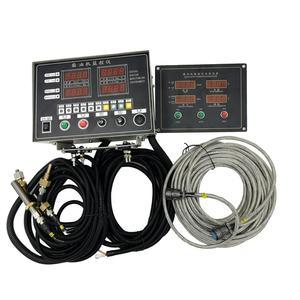
A ship condition monitoring Tool is a digitalized, sensor-based system used to track the health of maritime machinery and structural components in real-time. By analyzing data such as vibration, temperature, and oil quality, these tools allow crews to move from scheduled maintenance to predictive, condition-based maintenance (CBM), significantly reducing unplanned downtime and enhancing safety.
Ship Condition Monitoring Tool Product Picture
Ship Condition Monitoring Tool Industry View
Ship Condition Monitoring Tool is an integrated maritime digital monitoring category rather than a single software, sensor, or onboard alarm product. Its practical scope covers machinery and propulsion condition monitoring, hull and structural health monitoring, electrical and power-system monitoring, cargo and tank condition monitoring, navigation-related operational monitoring, remote diagnostics, and fleet-level asset health management. The core industry value lies in converting vessel maintenance from calendar-based inspection and reactive repair toward real-time sensing, anomaly detection, failure diagnosis, condition-based maintenance, and lifecycle risk management.
From the supply structure, the global market is best understood as a multi-layer ecosystem consisting of marine automation and propulsion OEMs, specialist condition-monitoring providers, hull and structural monitoring companies, and classification-society-backed digital platforms. Kongsberg, Wärtsilä, ABB, Everllence, Rolls-Royce Power Systems/mtu, WinGD, Caterpillar, and Accelleron benefit from deep integration with engines, propulsion systems, power systems, automation platforms, and lifecycle-service contracts. SKF, SPM, CM Technologies, Info Marine, Acoem, and similar players are more focused on machinery diagnostics, vibration monitoring, oil condition, rotating equipment health, and reliability engineering. Light Structures, DNV, HULLMOS, BMT, PhotonFirst, Xtronica, and related suppliers occupy the hull stress, fatigue, and structural-health-monitoring layer. From the regional competitive landscape, Europe remains the strongest base for classification rules, structural monitoring, engine diagnostics, and marine automation; South Korea and Japan are advancing through shipyard-led smart-ship platforms and engine/OEM diagnostic systems; China is building its position through engine-room monitoring, remote vessel supervision, intelligent bridge systems, and ship-shore data platforms.
From the demand structure, market growth is increasingly driven by a combination of uptime, safety, decarbonization compliance, fuel efficiency, and asset lifecycle management rather than maintenance cost reduction alone. Shipowners and fleet operators are under pressure from rising fuel costs, carbon-related compliance exposure, aging fleets, shortage of experienced crew, and tighter expectations from charterers, insurers, and classification societies. Condition monitoring systems help address these pressures by reducing unplanned downtime, enabling condition-based maintenance, improving spare-parts and dry-docking planning, and supporting operational decisions around fuel consumption, propulsion efficiency, vessel motion, and structural risk. From the policy environment, the IMO’s 2023 GHG Strategy sets a target of net-zero GHG emissions from international shipping by or around 2050, while the EU ETS has brought maritime emissions into a phased compliance framework beginning in 2024, and FuelEU Maritime has applied in full from 1 January 2025. These rules strengthen the commercial case for connected vessel data because monitoring outputs are increasingly tied to carbon intensity, voyage performance, fuel strategy, and compliance documentation.
From the product roadmap, the industry is evolving from local alarm panels and fragmented sensor installations toward multi-source data fusion, edge computing, cloud diagnostics, AI-based anomaly detection, digital twins, and class-recognized smart functions. Wärtsilä Expert Insight uses real-time vessel data to detect potential engine-system issues and support predictive maintenance, while Samsung Heavy Industries’ SVESSEL CBM received ClassNK type approval, and its SCBM system later received ABS SMART(MHM) Tier 2 PDA. In South Korea, the cooperation among KR, Sinokor, and HD Hyundai Marine Solution to deploy AI-driven CBM on container ships indicates that condition monitoring is moving from isolated pilot projects to certified, fleet-relevant commercial deployment. From the industry dynamics, certification and data credibility are becoming as important as the sensor layer itself: suppliers must prove not only that they can collect data, but also that their models, alarms, diagnostics, and maintenance recommendations are acceptable to shipowners, OEMs, class societies, and insurers. The main substitution risk comes from shipyard-owned platforms, closed OEM diagnostic ecosystems, and generic industrial predictive-maintenance tools, but maritime-specific expertise, class alignment, onboard integration, cyber resilience, and long-term service capability will remain key barriers to entry.
Ship Condition Monitoring Tool Market Summary
According to the latest report "Global Ship Condition Monitoring Tool Market 2026 by Manufacturers, Regions, Type and Application, Forecast to 2032" published by GIR (Global Info Research), the global Ship Condition Monitoring Tool market was valued at approximately USD 780 million in 2025 and is projected to reach USD 872 million in 2026. With a CAGR of 7.9% during the forecast period from 2026 to 2032, the market is expected to further expand to approximately USD 1373 million by 2032. This growth is driven by increasing market demand, evolving industry trends, and expanding application opportunities worldwide.
Figure1. Global Ship Condition Monitoring Tool Market Size (US$ Million), 2021-2032
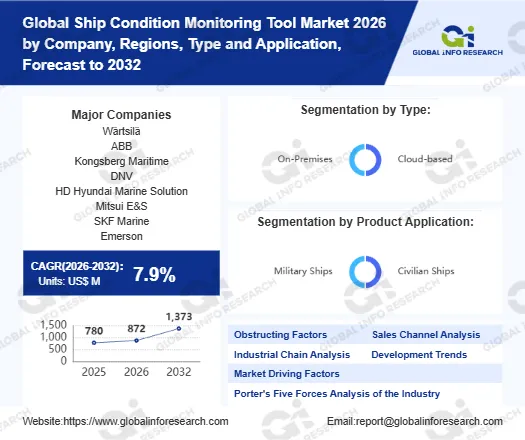 =
Figure2. Global Ship Condition Monitoring Tool Top 30 Players Ranking and Market Share (Ranking is based on the revenue of 2025, continually updated)
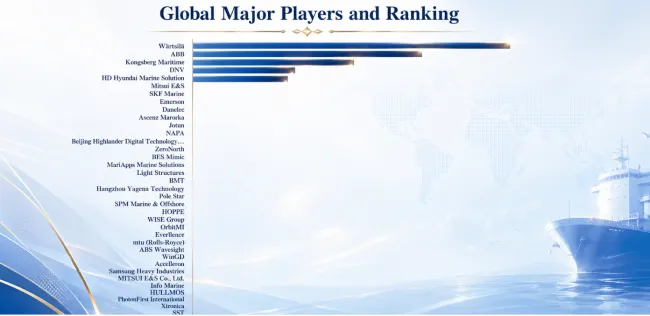
According to Global Info Research Top Players Research Center, the global key manufacturers of Ship Condition Monitoring Tool include Wärtsilä, ABB, Kongsberg Maritime, DNV, HD Hyundai Marine Solution, Mitsui E&S, SKF Marine, Emerson, Danelec, Ascenz Marorka, etc. In 2025, the global top five players had a share approximately 46.0% in terms of revenue.
Figure3. Ship Condition Monitoring Tool, Global Market Size, Split by Product Segment
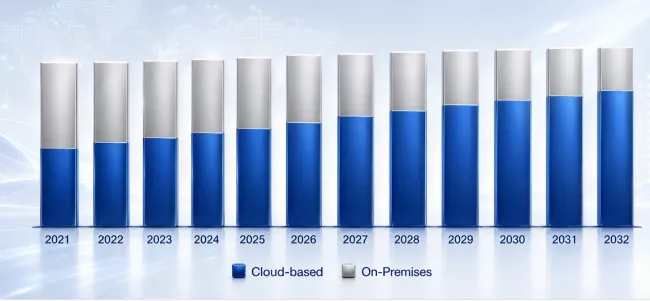
In terms of product type, currently On-Premises is the largest segment, hold a share of 52.9%.
Figure4. Ship Condition Monitoring Tool, Global Market Size, Split by Application Segment
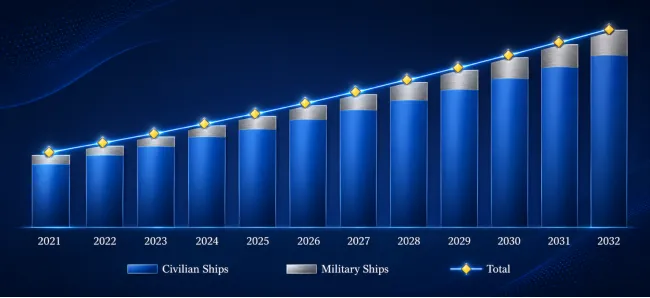
In terms of product application, currently Civilian Ships is the largest segment, hold a share of 86.1%.
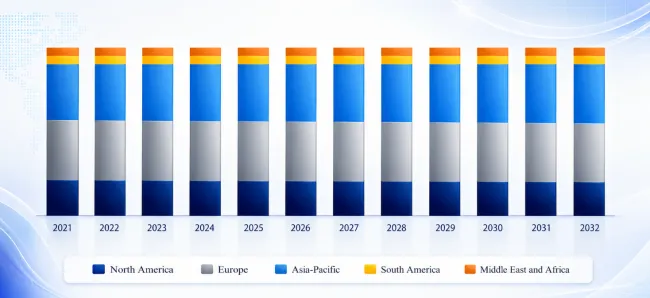
Figure5. Ship Condition Monitoring Tool, Global Market Size, Split by Region
Ship Condition Monitoring Tool Report Chapter Summary:
Chapter 1: Ship Condition Monitoring Tool Industry Definition and Market Overview
This chapter clearly defines the product definition, characteristics, and industry statistical scope of Ship Condition Monitoring Tool, systematically introduces its mainstream product classifications and key application areas, and presents the overall size and future outlook of the global market.
Chapter 2: In-depth Analysis of Core Ship Condition Monitoring Tool Companies (2021-2025)
This chapter focuses on the main players in the Ship Condition Monitoring Tool market. For each representative company, it not only introduces its basic overview, main business, and product portfolio, but also highlights its core operating data in the Ship Condition Monitoring Tool field, including sales volume, sales revenue, pricing strategies, and the latest development trends of the company from 2021 to 2025.
Chapter 3: Global Competitive Landscape Analysis (2021-2025)
This chapter examines the global Ship Condition Monitoring Tool competitive landscape from a macro perspective. By comparing the Ship Condition Monitoring Tool sales volume, pricing, revenue, and market share of major companies from 2021 to 2025, it quantitatively analyzes market concentration and interprets the competitive strategies and market position evolution of core manufacturers.
Chapter 4: Ship Condition Monitoring Tool Major Regional Market Size and Prospects (2021-2032)
This chapter conducts a regional-level analysis of the global Ship Condition Monitoring Tool core markets. It will present historical data on the Ship Condition Monitoring Tool market size (sales volume and revenue from 2021-2025) in major regions such as North America, Europe, and Asia Pacific, and provide market outlook forecasts for 2026-2032.
Chapter 5: Ship Condition Monitoring Tool Product Type Segmentation Market Forecast (2021-2032)
This chapter delves into the Ship Condition Monitoring Tool product structure. It will segment the Ship Condition Monitoring Tool market by different types (such as Cloud-based、On-Premises, etc.), and analyze in detail the historical market size of each segmented product category from 2021 to 2025 and the future growth trends from 2026 to 2032.
Chapter 6: Ship Condition Monitoring Tool Application Field Segmentation Market Forecast (2021-2032)
This chapter delves into the downstream application demand for Ship Condition Monitoring Tool. The market will be segmented by different application areas (such as Civilian Ships、Military Ships, etc.), presenting the historical market size for each area from 2021-2025 and future demand forecasts from 2026-2032.
Chapters 7-11: In-depth Analysis of Global Regional Markets (2021-2032)
This section is the core module of the Ship Condition Monitoring Tool report, providing an in-depth country/regional analysis across five major regions: North America, Europe, Asia Pacific, South America, and the Middle East & Africa. The chapter structure for each region is consistent:
Segmentation by Country/Region: Analysis of the market size and forecasts for major countries within the region from 2021-2032.
Segmentation by Product Type: Presentation of the market structure and development forecasts for different product types within the region from 2021-2032.
Segmentation by Application Area: Analysis of market demand and prospects for different application areas within the region from 2021-2032.
Chapter 12: Global Ship Condition Monitoring Tool Market Dynamics, Challenges, and Trends
This chapter aims to analyze the key internal and external factors affecting the development of the Ship Condition Monitoring Tool market. It systematically reviews the core drivers of Ship Condition Monitoring Tool market growth, the main obstacles and challenges faced, and assesses future product, technology, and market development trends.
Chapter 13: Ship Condition Monitoring Tool Industry Chain Structure Analysis
This chapter analyzes the entire industry chain ecosystem of the Ship Condition Monitoring Tool industry. From upstream raw material supply to midstream production and manufacturing, and then to downstream end-use applications, it analyzes the current status, cost structure, and collaborative relationships of each link.
Chapter 14: Sales Channel Model Research
This chapter focuses on the distribution channels of Ship Condition Monitoring Tool products. It analyzes the market share, advantages and disadvantages, and typical cases of mainstream sales channels, and explores the innovation and development trends of channel models.
Chapter 15: Research Conclusions and Strategic Recommendations
As a summary of the report, this chapter will distill the core findings and conclusions of the entire report and, based on a comprehensive understanding of the Ship Condition Monitoring Tool market, provide actionable strategic development recommendations for industry participants and potential entrants.
For more information, please refer to "Global Ship Condition Monitoring Tool Market 2026 by Manufacturers, Regions, Type and Application, Forecast to 2032". This report analyzes the supply and demand situation, development status, and changes in the industry, focusing on the development status of the industry, how to face the development challenges of the industry, industry development suggestions, industry competitiveness, and industry investment analysis and trend forecasts. The report also summarizes the overall development dynamics of the industry, including the impact of the latest US tariffs on the global supply chain, the supply relationship analysis of the industrial chain, and provides reference suggestions and specific solutions for the industry in terms of products.
Previous News:
Shrimp Farming Probiotics Market Forecast 2026–2032: 7.9% CAGR, USD 133 Million Opportunity, and Strategic Recommendations as Competition Shifts from Products to Integrated Farm Solutions
Next News:
Flush Diaphragm Pressure Sensor Market 2026: An 8.1% CAGR Opens a USD 4,532 Million Growth Opportunity by 2032 as Hygiene and Automation Demand Accelerates
The copyright of this article belongs to Global Info Research. Without the written authorization of our company, no organization or individual may reprint, quote, copy, adapt or use it for commercial purposes in any way. When authorized to use, the original source must be indicated as "Global Info Research" and the complete copyright information must be retained.
- We Provide Professional, Accurate Market Analysis to Help You Stay Ahead of Your Competition.Speak to our analyst >>

Our Clients
What We Can Provide?
With better results and higher quality products,Our professional reports can achieve four things:

Insight into the industry market information

Analyze market development needs

Prospects for future development

Develop industry investment strategy
- Digging deeper into global industry information and providing market strategies.Contact Us >>
- We Provide Professional, Accurate Market Analysis to Help You Stay Ahead of Your Competition.Speak to our analyst >>
Our Clients
What We Can Provide?
With better results and higher quality products,Our professional reports can achieve four things:
Insight into the industry market information
Analyze market development needs
Prospects for future development
Develop industry investment strategy
- Digging deeper into global industry information and providing market strategies.Contact Us >>