
Non-Methane Hydrocarbon Analyzer Market 2026: A 6.7% CAGR Points to a USD 501 Million Opportunity by 2032 as VOC and Ozone Pollution Control Policies Tighten
Published Date: Wednesday,18 Nov,2026


 Non-Methane Hydrocarbon Analyzer
 Market Summary
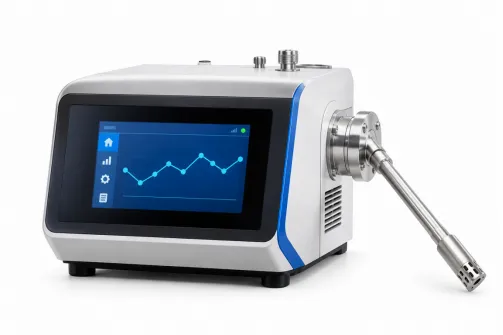
A non-methane hydrocarbon analyzer is an environmental monitoring device used to measure the concentration of NMHC in air or industrial waste gas. This equipment is widely used in atmospheric environmental monitoring stations, petrochemical plant emission monitoring, and vehicle emission testing systems. The instrument typically uses gas chromatography combined with a flame ionization detector (FID) for analysis, separating methane from other hydrocarbons to accurately determine the NMHC concentration. The upstream of the industry chain includes suppliers of core components such as chromatographic columns, detectors, sampling pumps, electronic control systems, and gas sensors; the midstream consists of instrument manufacturers responsible for integrating sampling systems, gas chromatography modules, detection systems, and software control systems; the downstream is mainly used in environmental monitoring stations, industrial emission monitoring systems, petrochemical plants, vehicle emission testing laboratories, and environmental regulatory agencies. In 2025, the global production of NMHC analyzers was approximately 11,100 units, with an average market price of approximately US$28,000 per unit. The gross profit margin of major companies in the industry was approximately 38%–55%. Global production capacity in 2025 was approximately 14,800 units.
According to the latest research report from Global Info Research, the global market size for non-methane hydrocarbon analyzers is expected to reach US$491 million in 2032, with a CAGR of 6.81% over the next few years.
Figure1. Global Non-Methane Hydrocarbon Analyzer Market Size (US$ Million), 2026-2032
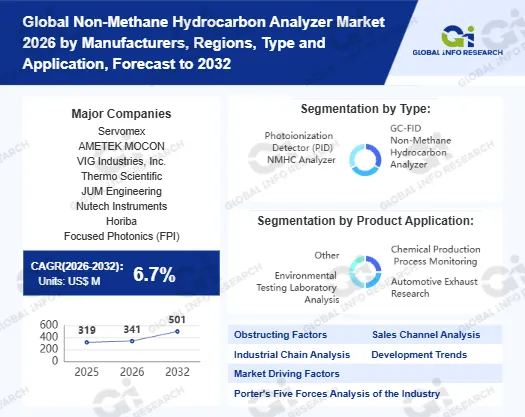
According to the latest report "Global Non-Methane Hydrocarbon Analyzer Market 2026 by Manufacturers, Regions, Type and Application, Forecast to 2032" published by GIR (Global Info Research), the global Non-Methane Hydrocarbon Analyzer market was valued at approximately USD 319 million in 2025 and is projected to reach USD 341 million in 2026. With a CAGR of 6.7% during the forecast period from 2026 to 2032, the market is expected to further expand to approximately USD 501 million by 2032. This growth is driven by increasing market demand, evolving industry trends, and expanding application opportunities worldwide.
Figure2. Global Non-Methane Hydrocarbon Analyzer Top 10 Players Ranking and Market Share (Ranking is based on the revenue of 2025, continually updated)
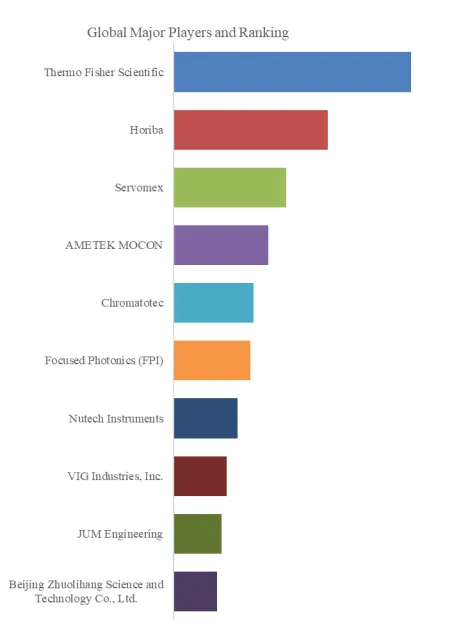
This report profiles key players of Non-Methane Hydrocarbon Analyzer such as Thermo Fisher Scientific,Horiba,Servomex
In 2025, the global top five Non-Methane Hydrocarbon Analyzer players account for 32.01% of market share in terms of revenue. Above figure shows the key players ranked by revenue in Non-Methane Hydrocarbon Analyzer.
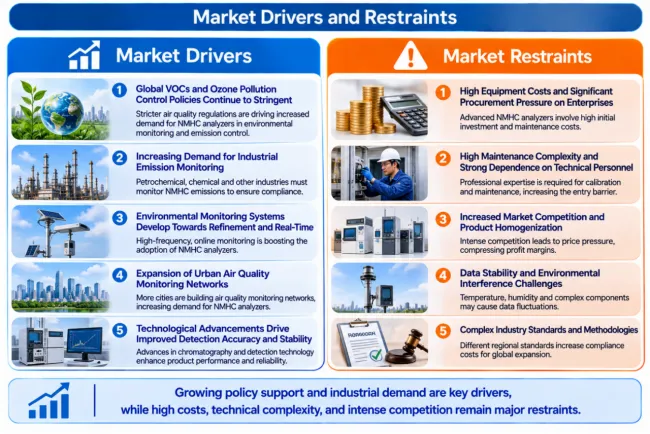
Market Drivers:
1. Global VOCs and Ozone Pollution Control Policies Continue to Stringent
As countries strengthen their air pollution control efforts, volatile organic compounds (VOCs), as important precursors to ozone and PM2.5, have been included in key regulatory areas. Non-methane hydrocarbons (NMHC), a key indicator among VOCs, are widely used in ambient air quality assessment and emission control. Mandatory monitoring requirements at the policy level have led to a continuous increase in demand for NMHC analyzers in environmental enforcement and emission supervision.
2. Increasing Demand for Industrial Emission Monitoring
Petrochemical, chemical, coating, printing, and oil refining industries are major sources of NMHC emissions. With increasingly stringent industrial emission standards, companies must continuously monitor and control their exhaust emissions to ensure compliance. As an important component of CEMS (Continuous Emission Monitoring System), NMHC analyzers are seeing a continuous increase in their deployment rate in the industrial sector, becoming one of the core devices for environmental compliance.
3. Environmental Monitoring Systems Develop Towards Refinement and Real-Time Monitoring
Traditional environmental monitoring is gradually transforming towards high-frequency, online, and real-time monitoring, driving the extension of analytical instruments from laboratory testing to online monitoring. NMHC analyzers enable continuous monitoring and real-time data upload, meeting the needs of environmental protection departments for dynamic monitoring of pollution sources and significantly increasing their market penetration.
4. Expansion of Urban Air Quality Monitoring Networks
With the gradual improvement of joint prevention and control mechanisms for air pollution in urban clusters and regions, various regions are accelerating the construction of air quality monitoring networks. As an important indicator for ozone pollution control, NMHC has been incorporated into urban air monitoring systems, leading to a continuous increase in demand for related equipment in environmental monitoring stations and scientific research monitoring projects.
5. Technological Advancements Drive Improved Detection Accuracy and Stability
Advances in gas chromatography, flame ionization detection (FID), and spectral analysis technologies have significantly improved the sensitivity, stability, and anti-interference capabilities of NMHC analyzers. Simultaneously, the increasing prevalence of automatic calibration, remote monitoring, and intelligent data analysis functions is driving the upgrade of products from single detection devices to intelligent analysis systems.
Restraint:
1. High Equipment Costs and Significant Procurement Pressure on Enterprises
High-precision NMHC analyzers typically employ complex gas chromatography or high-end detection modules, resulting in a high overall equipment price. They also require supporting maintenance and calibration systems. For small and medium-sized enterprises (SMEs), the high initial investment and operating costs limit the speed of equipment adoption.
2. High Maintenance Complexity and Strong Dependence on Technical Personnel
NMHC analyzers are precision analytical instruments, requiring a high level of professional expertise from operators, including in calibration, consumable replacement, and system maintenance. Improper maintenance can easily lead to data deviations or equipment malfunctions, increasing the barrier to entry
3. Increased Market Competition and Product Homogenization
With the continuous entry of domestic and international manufacturers into this field, competition in the low-to-mid-range market has intensified. The convergence of functions in some products has led to significant price competition. This compresses profit margins for enterprises, hindering high R&D investment and technological upgrades.
4. Data Stability and Environmental Interference Challenges
NMHC detection is significantly affected by ambient temperature and humidity, background gases, and complex emission components. In practical applications, data fluctuations and interference are common, placing high demands on the instrument's anti-interference capabilities and long-term stability.
5. Complex Industry Standards and Methodologies
Different countries and regions have different NMHC detection methods (such as GC-FID and online infrared) and emission standards, increasing the difficulty of equipment adaptation. Enterprises need to meet multiple certification systems when expanding into cross-regional markets, increasing compliance costs.
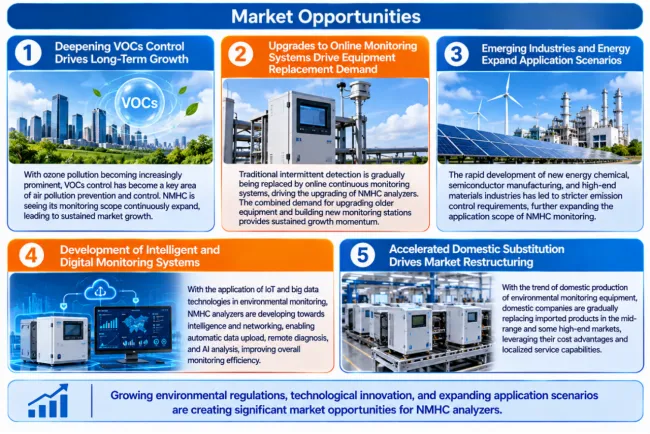
Opportunity:
1. Deepening VOCs Control Drives Long-Term Growth
With ozone pollution becoming increasingly prominent, VOCs control has become a key area of air pollution prevention and control. NMHC, as a core VOCs monitoring indicator, is seeing its monitoring scope continuously expand, from industrial sources to urban environments and regional joint prevention systems, leading to sustained market growth.
2. Upgrades to Online Monitoring Systems Drive Equipment Replacement Demand
Traditional intermittent detection is gradually being replaced by online continuous monitoring systems, driving the upgrading of NMHC analyzers. The combined demand for upgrading older equipment and building new monitoring stations provides sustained growth momentum for the industry.
3. Emerging Industries and Energy Expand Application Scenarios
The rapid development of new energy chemical, semiconductor manufacturing, and high-end materials industries has led to stricter emission control requirements, further expanding the application scope of NMHC monitoring. These emerging industries have a high demand for high-precision analytical equipment, driving growth in the high-end market.
4. Development of Intelligent and Digital Monitoring Systems
With the application of IoT and big data technologies in environmental monitoring, NMHC analyzers are developing towards intelligence and networking, enabling automatic data upload, remote diagnosis, and AI analysis, improving overall monitoring efficiency and management level.
5. Accelerated Domestic Substitution Drives Market Restructuring
With the trend of domestic production of environmental monitoring equipment, domestic companies are gradually replacing imported products in the mid-range and some high-end markets. Leveraging their cost advantages and localized service capabilities, Chinese manufacturers are expected to increase their global market share.
Non-Methane Hydrocarbon Analyzer Report Chapter Summary:
Chapter 1: Non-Methane Hydrocarbon Analyzer Industry Definition and Market Overview
This chapter clearly defines the product definition, characteristics, and industry statistical scope of Non-Methane Hydrocarbon Analyzer, systematically introduces its mainstream product classifications and key application areas, and presents the overall size and future outlook of the global market.
Chapter 2: In-depth Analysis of Core Non-Methane Hydrocarbon Analyzer Companies (2021-2025)
This chapter focuses on the main players in the Non-Methane Hydrocarbon Analyzer market. For each representative company, it not only introduces its basic overview, main business, and product portfolio, but also highlights its core operating data in the Non-Methane Hydrocarbon Analyzer field, including sales volume, sales revenue, pricing strategies, and the latest development trends of the company from 2021 to 2025.
Chapter 3: Global Competitive Landscape Analysis (2021-2025)
This chapter examines the global Non-Methane Hydrocarbon Analyzer competitive landscape from a macro perspective. By comparing the Non-Methane Hydrocarbon Analyzer sales volume, pricing, revenue, and market share of major companies from 2021 to 2025, it quantitatively analyzes market concentration and interprets the competitive strategies and market position evolution of core manufacturers.
Chapter 4: Non-Methane Hydrocarbon Analyzer Major Regional Market Size and Prospects (2021-2032)
This chapter conducts a regional-level analysis of the global Non-Methane Hydrocarbon Analyzer core markets. It will present historical data on the Non-Methane Hydrocarbon Analyzer market size (sales volume and revenue from 2021-2025) in major regions such as North America, Europe, and Asia Pacific, and provide market outlook forecasts for 2026-2032.
Chapter 5: Non-Methane Hydrocarbon Analyzer Product Type Segmentation Market Forecast (2021-2032)
This chapter delves into the Non-Methane Hydrocarbon Analyzer product structure. It will segment the Non-Methane Hydrocarbon Analyzer market by different types (such as GC-FID Non-Methane Hydrocarbon Analyzer、FID Total Hydrocarbon Analyzer with Methane Cutter、Photoionization Detector (PID) NMHC Analyzer, etc.), and analyze in detail the historical market size of each segmented product category from 2021 to 2025 and the future growth trends from 2026 to 2032.
Chapter 6: Non-Methane Hydrocarbon Analyzer Application Field Segmentation Market Forecast (2021-2032)
This chapter delves into the downstream application demand for Non-Methane Hydrocarbon Analyzer. The market will be segmented by different application areas (such as Chemical Production Process Monitoring、Automotive Exhaust Research、Environmental Testing Laboratory Analysis、Other, etc.), presenting the historical market size for each area from 2021-2025 and future demand forecasts from 2026-2032.
Chapters 7-11: In-depth Analysis of Global Regional Markets (2021-2032)
This section is the core module of the Non-Methane Hydrocarbon Analyzer report, providing an in-depth country/regional analysis across five major regions: North America, Europe, Asia Pacific, South America, and the Middle East & Africa. The chapter structure for each region is consistent:
Segmentation by Country/Region: Analysis of the market size and forecasts for major countries within the region from 2021-2032.
Segmentation by Product Type: Presentation of the market structure and development forecasts for different product types within the region from 2021-2032.
Segmentation by Application Area: Analysis of market demand and prospects for different application areas within the region from 2021-2032.
Chapter 12: Global Non-Methane Hydrocarbon Analyzer Market Dynamics, Challenges, and Trends
This chapter aims to analyze the key internal and external factors affecting the development of the Non-Methane Hydrocarbon Analyzer market. It systematically reviews the core drivers of Non-Methane Hydrocarbon Analyzer market growth, the main obstacles and challenges faced, and assesses future product, technology, and market development trends.
Chapter 13: Non-Methane Hydrocarbon Analyzer Industry Chain Structure Analysis
This chapter analyzes the entire industry chain ecosystem of the Non-Methane Hydrocarbon Analyzer industry. From upstream raw material supply to midstream production and manufacturing, and then to downstream end-use applications, it analyzes the current status, cost structure, and collaborative relationships of each link.
Chapter 14: Sales Channel Model Research
This chapter focuses on the distribution channels of Non-Methane Hydrocarbon Analyzer products. It analyzes the market share, advantages and disadvantages, and typical cases of mainstream sales channels, and explores the innovation and development trends of channel models.
Chapter 15: Research Conclusions and Strategic Recommendations
As a summary of the report, this chapter will distill the core findings and conclusions of the entire report and, based on a comprehensive understanding of the Non-Methane Hydrocarbon Analyzer market, provide actionable strategic development recommendations for industry participants and potential entrants.
For more information, please refer to "Global Non-Methane Hydrocarbon Analyzer Market 2026 by Manufacturers, Regions, Type and Application, Forecast to 2032". This report analyzes the supply and demand situation, development status, and changes in the industry, focusing on the development status of the industry, how to face the development challenges of the industry, industry development suggestions, industry competitiveness, and industry investment analysis and trend forecasts. The report also summarizes the overall development dynamics of the industry, including the impact of the latest US tariffs on the global supply chain, the supply relationship analysis of the industrial chain, and provides reference suggestions and specific solutions for the industry in terms of products.
Previous News:
2026 Modular Sodium-Ion Battery Pack Outlook: 28.8% CAGR Forecast as Cylindrical, Prismatic and Pouch Modular Designs Scale Toward USD 4,199 Million by 2032
Next News:
Medical Supply Chain Management Solutions Market 2026: A 6.6% CAGR Points to a USD 7,824 Million Opportunity by 2032 as Cost Control and Supply Resilience Drive Digitalization
The copyright of this article belongs to Global Info Research. Without the written authorization of our company, no organization or individual may reprint, quote, copy, adapt or use it for commercial purposes in any way. When authorized to use, the original source must be indicated as "Global Info Research" and the complete copyright information must be retained.
- We Provide Professional, Accurate Market Analysis to Help You Stay Ahead of Your Competition.Speak to our analyst >>

Our Clients
What We Can Provide?
With better results and higher quality products,Our professional reports can achieve four things:

Insight into the industry market information

Analyze market development needs

Prospects for future development

Develop industry investment strategy
- Digging deeper into global industry information and providing market strategies.Contact Us >>
- We Provide Professional, Accurate Market Analysis to Help You Stay Ahead of Your Competition.Speak to our analyst >>
Our Clients
What We Can Provide?
With better results and higher quality products,Our professional reports can achieve four things:
Insight into the industry market information
Analyze market development needs
Prospects for future development
Develop industry investment strategy
- Digging deeper into global industry information and providing market strategies.Contact Us >>